English
 Chinese
Scan QRCode

If you had told a German or Japanese automaker executive ten years ago, "In the future, the soul of your car manufacturing will rely on Chinese suppliers, and even your development cycle must follow the model of Chinese automakers," they would likely have looked at you with a puzzled expression and said calmly, "We define automobiles." However, by 2026, the narrative has taken a surreal twist. Volkswagen CEO Oliver Blume revealed in an interview that the company is abandoning its traditional export model centered on Germany, particularly by strengthening localized R&D and manufacturing in the Chinese market. He specifically mentioned China's experience, stating that the industrial planning approach of Chinese automakers is worth learning.

Volkswagen is not an isolated case. As a global automotive industry giant, Toyota has taken even more decisive action by directly implementing the RCE system, appointing Chinese engineers as lead vehicle developers and granting them full decision-making authority across the entire process—from product planning and development validation to mass production and sales. All signs indicate that these former "top-tier leaders" in the automotive world are lowering their standards and actively seeking lessons from the Chinese market. In the past, they were the teachers, and the Chinese market was the student. Now, the teachers find themselves struggling to keep up as the student races ahead. This transformation is not merely a self-revolution amid the challenges of transition but also a complete reshaping of the global automotive industry's power structure.
From 'exchanging market for technology' to 'reverse joint venture'
To understand why overseas car companies have undergone such a transformation, we need to first look at what they have gone through. In the current era of rapid rise of new energy vehicles, many foreign car companies are struggling. Taking Toyota as an example, from April to December 2025, Toyota's global sales reached 7.302 million vehicles, a year-on-year increase of 4.3%, with a net profit of 3.03 trillion yen, a year-on-year decrease of 26.1%. Volkswagen, on the other hand, achieved an operating profit of 8.9 billion euros in 2025, setting a new low in recent years. Especially in the Chinese market, there are domestic brands that are actively transforming, followed by new forces that are fully committed to electrification. The competitive pressure on these overseas car companies is increasing day by day. In this situation, they made a disruptive decision to copy jobs from Chinese car companies. In July 2023, Volkswagen invested $700 million in Xiaopeng Motors to jointly develop new car models. Toyota has partnered with companies such as Momenta and Huawei to equip its new models with HarmonyOS cockpit and Momenta assisted driving. Stellantis is deeply cooperating with Zero Run and strategically investing in Zero Run automobiles.
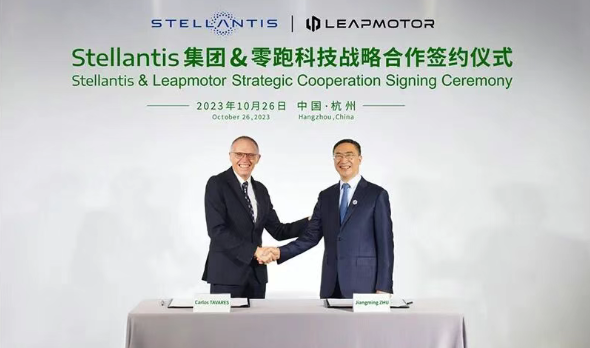
Previously, it used to be 'China's automotive industry goes out of the market, overseas car companies go out with technology', but now it has become 'reverse joint venture'. The industry generally believes that similar stories will continue to happen and will become the main theme of cooperation between Chinese and foreign car companies in the future.
The reasons for the shift of attack and defense
It is not difficult to find that whether it is the active learning of German automakers or the active adjustment of Japanese automakers, the core of all multinational car companies' Chinese transformation is to learn from China's automotive technology system and replicate the logic of China's automotive industry. But the key issue is why the giant that once dominated the global automotive industry must now rely on learning from China to break through? Behind this lies three major structural driving forces, which are also the core confidence for the rise of China's automobile industry. The driving force of the industrial end is the crushing advantage of China's new energy supply chain. At present, China has established the world's most complete supply chain system for new energy vehicles, with a high matching rate of core components, especially core configurations such as power batteries, intelligent cabins, and assisted driving, all of which have achieved localized research and development and production.
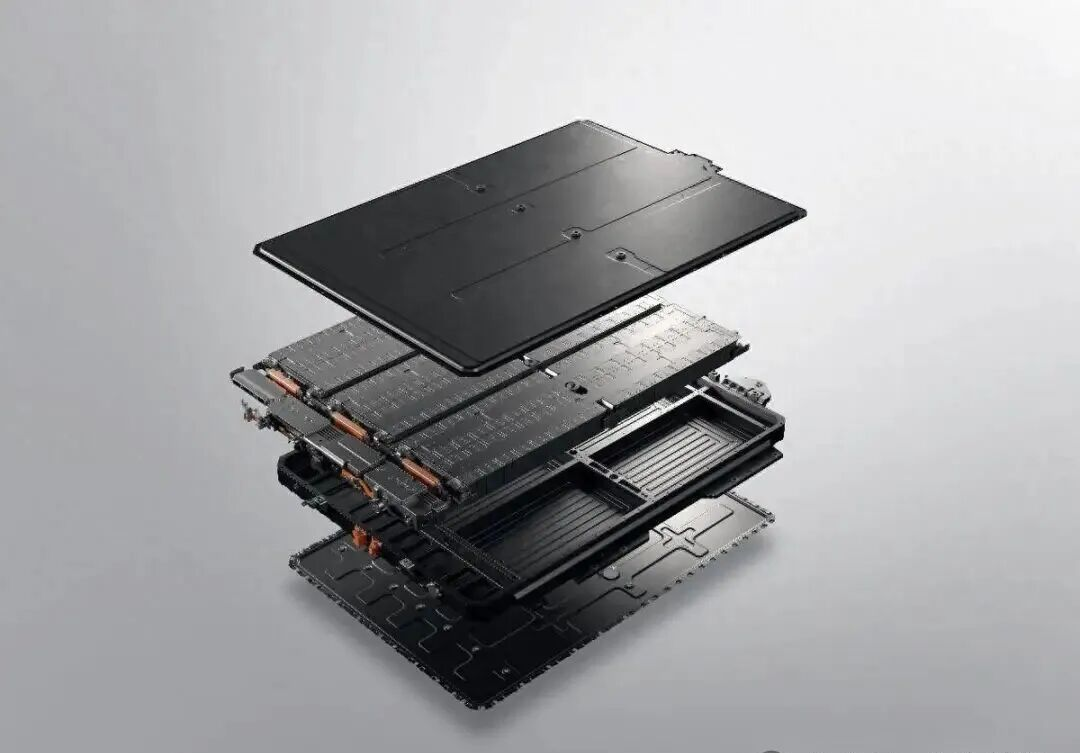
In one sentence, the most essential lifeline of new energy vehicles has been firmly grasped by the Chinese automotive industry. For overseas car companies, adopting technologies such as assisted driving and intelligent cockpit in the Chinese automotive supply chain not only saves a lot of market validation time, but also improves the acceptance of Chinese users. For their transformation, it is obviously a time-saving, labor-saving, and efficient thing. Speaking of the driving force on the market side, if we talk about the most radical market for new energy transformation in the global automotive market, it is undoubtedly China. With frequent policy support, car companies have responded one after another, and consumers have voted with their wallets, jointly creating the world's largest new energy vehicle market. Data shows that by 2025, the global sales of new energy vehicles will reach 23.542 million units, a year-on-year increase of 29.1%. Among them, the global proportion of new energy vehicle sales in China has risen to 70.3%. Equivalent to at least two out of every three new energy vehicles sold globally being Chinese brands.
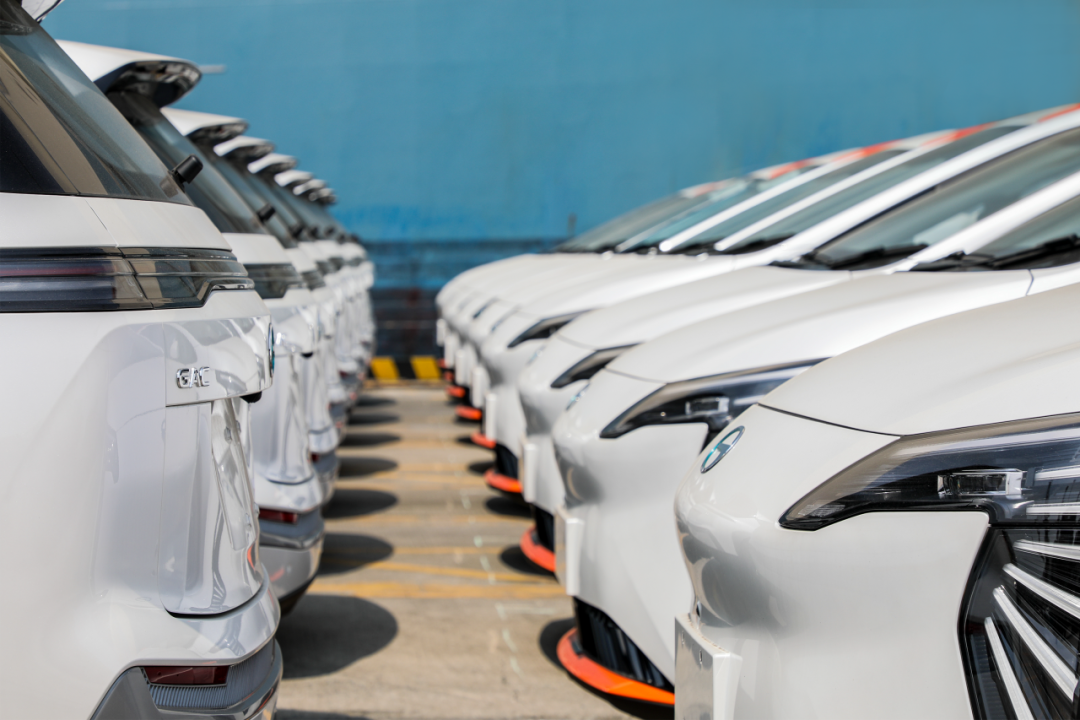
At the same time, the number of active new energy vehicle models in the Chinese automotive market is still increasing frequently, with new models being launched and old models being iterated every month, and the speed of configuration updates leading the world. For many car companies that are not actively transitioning to new energy, while they are still struggling with whether or not to pursue new energy, Chinese consumers are already choosing whether to use assisted driving and whether the intelligent cockpit works smoothly. Finally, there is the driving force on the user side. In the past, the automotive market was mostly developed by overseas car companies abroad and then introduced to China for sales. The configuration, functions, and other product strengths were completely determined by the local market, and Chinese users were in an adaptive state. But now, this situation has completely changed, thanks to China's leading new energy vehicle industry and huge user base, the demand definition rights of Chinese users have been increasingly valued. Many global car models from overseas car companies will be directly abandoned by consumers if they cannot meet the needs of Chinese users. In this situation, collaborating with Chinese car companies and introducing the Chinese new energy vehicle supply chain is the wisest approach. In one sentence, the demand of Chinese new energy vehicle users has become the "barometer" of the global new energy vehicle industry. The systematic advantage of the industrial side, the forced competition of the market side, and the demand leadership of the user side, driven by these three driving forces, are no longer simply sales competition, but systematic leadership, which is also the core confidence of China's automotive industry to make global giants bow down and learn. It's not that we're too strong, it's that our opponents can't keep up with our pace.
The global automotive discourse power is being restructured
All of this points to a bigger change, which is the shift of the global automotive industry's discourse power towards China. Twenty years ago, car shows were held by foreign and joint ventures. At that time, driving a joint venture car was prestigious, while driving an imported car was prestigious. At current auto shows, both domestically and internationally, Chinese car companies seem to have taken the lead script and become the focus of the entire audience. This means that the industrial logic of "multinational car companies setting rules and Chinese car companies following suit" has become a thing of the past.
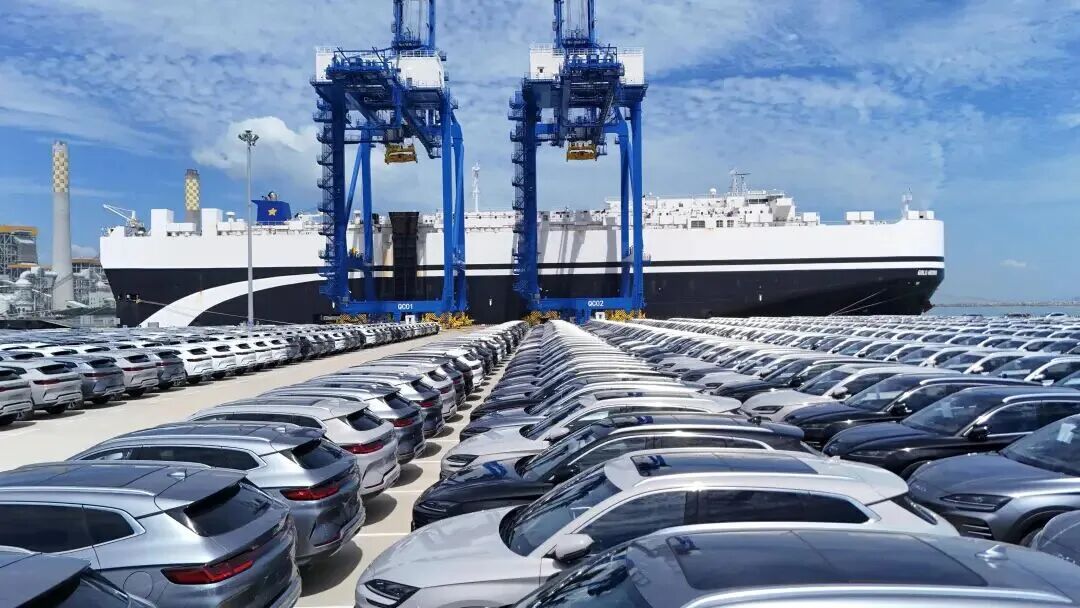
For example, in the field of solid-state batteries that many car companies are laying out, data shows that there are no relevant standards for solid-state batteries internationally. Therefore, China has developed a foreign language version when formulating national standards for solid-state batteries, which is beneficial for international car companies and battery manufacturers to use and jointly promote the development of the solid-state battery industry. If China is able to establish standards first, it means that China has reached the "threshold" of the cutting-edge technology of solid-state batteries, and is a technology leader. This is also more conducive to the export of solid-state batteries and vehicles equipped with solid-state batteries, accelerating the pace of going global. This itself is a technological business card. There are many technological business cards in the Chinese automotive industry, such as assisted driving, intelligent cockpit, and three electric technology. The overseas car companies that adopt Chinese suppliers mentioned earlier are vivid examples. It can be seen that although the automotive industry was born in Germany and popularized globally, the industrial logic of this wave of electrification and intelligence is being defined by the Chinese people. What's even more worth looking forward to is that this is just the beginning.
AMS2024 Exhibition Guide | Comprehensive Exhibition Guide, Don't Miss the Exciting Events Online and Offline
Notice on Holding the Rui'an Promotion Conference for the 2025 China (Rui'an) International Automobile and Motorcycle Parts Exhibition
On September 5th, we invite you to join us at the Wenzhou Auto Parts Exhibition on a journey to trace the origin of the Auto Parts City, as per the invitation from the purchaser!
Hot Booking | AAPEX 2024- Professional Exhibition Channel for Entering the North American Auto Parts Market
The wind is just right, Qianchuan Hui! Looking forward to working with you at the 2024 Wenzhou Auto Parts Exhibition and composing a new chapter!
Live up to Shaohua | Wenzhou Auto Parts Exhibition, these wonderful moments are worth remembering!
Free support line!
Email Support!
Working Days/Hours!



Copyright © 2018, PKT Auto Parts All Rights Reserved
浙ICP备18033565号-1
 浙公网安备33038102332475号